The short answer
Start your wedding seating chart once RSVPs close. Get the venue floor plan and table sizes, place the bridal or sweetheart table first, then family, then friend groups. Flag dietary needs by seat. Send the final chart to your venue by their deadline, which is often 3 to 4 weeks before the wedding, and give your coordinator the same version.
At a glance
- Don't start the real chart until RSVPs are closed. Early drafts get redone.
- Ask your venue for the floor plan, table sizes and how many fit at each table.
- A 1.8m round table typically seats 8 to 10. A 2.4m trestle seats 8, or 10 with someone at each end.
- Venue deadlines vary. One Sydney venue we checked wants the seating chart 4 weeks out and takes no changes in the last 72 hours.
- Dietary needs belong on the chart, by seat, not just in a total for the caterer.
- On the day, your coordinator sets out place cards, checks table numbers and handles no-shows and moves.
When should you finalise your wedding seating chart?
Finalise it by your venue or caterer's deadline for final numbers, which is usually 3 to 4 weeks before the wedding. Start the proper draft as soon as your RSVP date passes.
Every venue sets its own dates, so check your contract. At the time of writing (October 2026), one Sydney venue's terms ask for final numbers, the floor plan and the guest seating chart 4 weeks before the wedding, with no updates accepted in the final 72 hours. Another asks for guaranteed numbers 21 days out and dietary requirements 28 days out. Some are later, some earlier.
The chart and the caterer's final numbers are linked. Once you give a guaranteed number, you usually pay for it even if someone drops out. So lock the guest list first, then the chart, then send both together.
| When | What to do |
|---|---|
| 8 to 10 weeks out | RSVPs coming in. Ask the venue for the floor plan, table sizes and their deadlines. |
| 6 to 7 weeks out | RSVPs close. Chase the last replies. Collect dietary needs and kids' ages. |
| 5 to 6 weeks out | First full draft. Decide on bridal or sweetheart table and the table layout. |
| 4 to 5 weeks out | Check the draft with parents if you want to. Order or print place cards and the table plan sign. |
| 4 weeks out | Send the final chart, numbers and dietary list by seat to the venue or caterer. |
| 2 to 3 weeks out | Coordinator checks the chart against the venue floor plan and run sheet. |
| Wedding week | Late changes only, through your coordinator. Place cards sorted by table and handed over. |
Move each step to match your own venue's deadline. If yours is 7 days out, you have more breathing room.
How do you do a wedding seating chart, step by step?
Work from the outside in: confirmed guests, the room, the top table, family, then friend groups, then the tricky seats. Use one master list so nothing gets lost between drafts.
- Close your RSVPs. Work only from guests who said yes. Count kids and plus-ones as full seats unless the venue says otherwise.
- Get the venue floor plan. Ask how many tables fit, what size they are, where the dance floor, bar, speakers and exits sit, and where the cake and gift tables go.
- Place the bridal or sweetheart table first. Everything else is arranged around it.
- Seat immediate family next. Parents and grandparents usually go closest to you.
- Group everyone else. Uni friends, work friends, cousins, the netball team. Fill tables by group, then mix the leftovers.
- Solve the tricky seats (below) before you call it done.
- Number your tables to match the venue's floor plan, so table 4 on your chart is table 4 in the room.
- Add dietary needs by seat, then do a final head count per table against capacity.
Plenty of couples do this on paper first. Cut out circles for tables and write names on sticky notes so you can move people around. Then type the final version into a spreadsheet, because that's what your venue will need. Download the seating chart template (Excel). It has a guest list, a tables sheet that counts guests per table for you, and a page for the caterer.
How many guests fit at each wedding table?
A 1.8m round table typically seats 8 to 10 guests and a 1.5m round seats 6 to 8. Long trestle tables seat about 3 to 4 per side, plus one at each end if the ends are free.
| Table | Typical guests | Good to know |
|---|---|---|
| 1.5m round | 6 to 8 | Better for small rooms and small groups |
| 1.8m round | 8 to 10 | The usual wedding round. 11 is a squeeze. |
| 1.8m trestle (rectangle) | 6, or 8 with ends | 3 per side, 1 per end |
| 2.4m trestle (rectangle) | 8, or 10 with ends | 4 per side, 1 per end |
| Long banquet (trestles joined) | About 8 per 2.4m length | End seats are lost where tables join |
Figures are from Sydney event hire guides at the time of writing (October 2026). Centrepieces, charger plates and chair style can reduce what fits.
Rounds make it easy to keep a group together. Long tables fit more people into a narrow room and feel more like a dinner party, but they're harder to split cleanly between groups. If you're using long tables, think in blocks of 8 rather than whole tables.
Should you have a bridal table or a sweetheart table?
A bridal table seats you with your bridal party. A sweetheart table seats just the two of you. Choose the one that suits your bridal party size and your family dynamics.
| Bridal table | Sweetheart table | |
|---|---|---|
| Who sits there | You plus the bridal party, sometimes partners too | Just the two of you |
| Works well when | You have a small bridal party and want them close | Your bridal party is big, or their partners would be split off |
| Watch for | Bridal party partners stranded at other tables | Feeling cut off. Place it near family and friends. |
| Space | Needs a long table across the front of the room | Small table, easy to fit anywhere |
If you go with a sweetheart table, seat the bridal party and their partners at the tables closest to you. It keeps the energy near the front for speeches.
How do you seat tricky guests at a wedding?
Give each tricky situation its own solution before you finalise: separate tables of equal standing for divorced parents, a plan for the kids, and a friendly face for anyone who knows no one.
Divorced or separated parents
Give each parent their own table, at the same distance from you, with their own people around them. Nobody should feel they got the worse spot. Tell your MC and coordinator too, so entrances and photos are handled the same way.
Kids
Little ones sit with their parents. A kids' table works for children old enough to sit without help, and best near their parents' table, not across the room. Check with the venue if kids' meals, high chairs or booster seats change your numbers.
Plus-ones and guests who don't know anyone
Always seat a plus-one with the person they came with. For a guest who doesn't know many people, put them with the most welcoming table you have, next to someone with something in common.
Older guests
Seat grandparents and older guests close to the bathrooms and an exit, with an easy path to their table. Keep them away from the speakers and the dance floor. They'll hear the speeches and still be able to talk.
Dietary needs
Ask on the RSVP what people can't eat, then follow up anything vague. Answers like 'no chicken' or a diet nobody has heard of need a quick message to clarify. Then mark every dietary need by table and seat, so staff know which plate goes where.
Do you need escort cards, a table plan or place cards?
You need one way to show guests their table, either escort cards or a table plan display. Place cards are only needed if you're assigning individual seats.
| Option | What it does | Best for |
|---|---|---|
| Table plan display | One sign or board listing every table and who's on it | Most weddings. One item to set up and update. |
| Escort cards | A card per guest showing their table, set out near the entry | Guests find their own name fast. More cards to sort. |
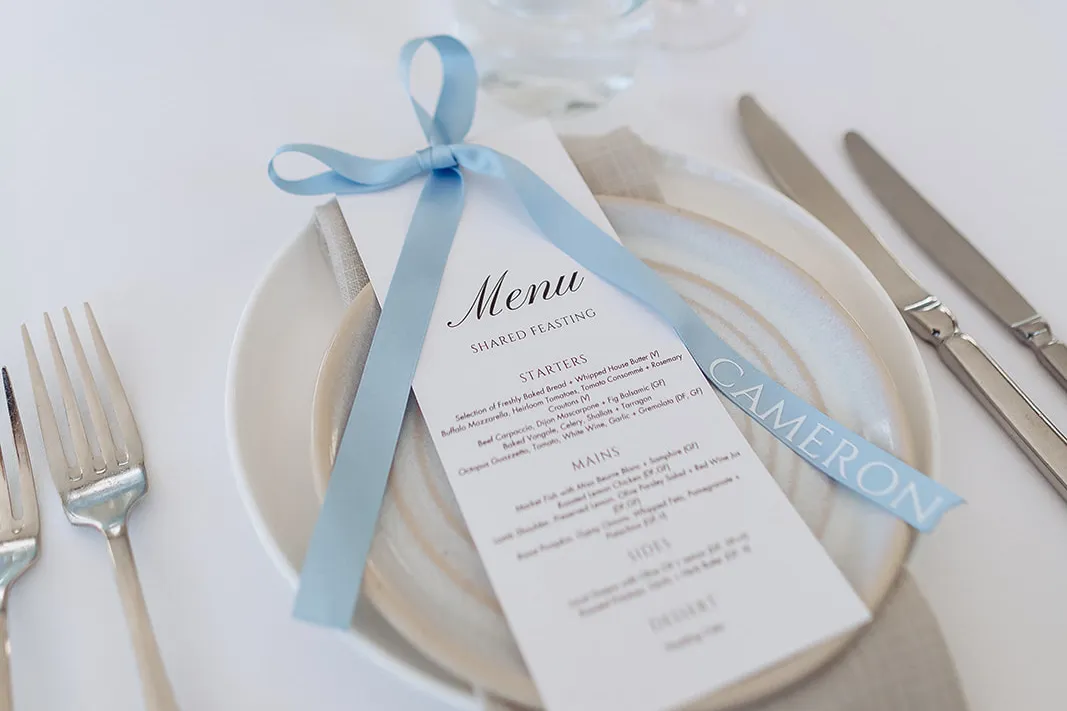
| Place cards | A card on each setting showing exactly where someone sits | Assigned seats, dietary meals by seat, formal dinners |
If you have dietary needs and alternate drop meals, place cards make service easier, because staff can see who is who. Budget for them early. Seating signs and place cards are among the small items couples forget about until the last month.
What do your coordinator and venue need from your seating chart?
The final chart with table numbers that match the venue floor plan, a head count per table, and a dietary list sorted by table and seat. Send everyone the same version.
Send to your venue or caterer
- Final guest numbers, including kids and suppliers' meals if you're providing them
- The seating chart with table numbers matching their floor plan
- Dietary list by table and seat, with allergies clearly marked
- Kids' meals, high chairs and anything else that changes a setting
Send to your coordinator
- The same final chart and dietary list
- Place cards and escort cards, sorted by table, plus the table plan sign
- Table numbers or names, and any table styling that goes with them
- A note of sensitive seating, like separated parents or guests to keep apart
When I get the chart, I check it against the venue floor plan, the run sheet and the head counts. Table numbers missing from the floor plan, a table over capacity or a dietary note that doesn't match a seat all get fixed before the day. The wedding day coordinator checklist shows where this fits in the weeks before.
What happens to the seating chart on the wedding day?
Your coordinator sets out the table plan and place cards, checks every table against the chart, briefs venue staff on dietary seats and handles any no-shows or last-minute moves.
- Setup: table plan sign or escort cards placed at the entry, place cards set in order on each table
- Checks: table numbers in the right spots on the floor plan, seat counts matching the chart
- Dietary briefing: the venue team gets the list by seat before guests sit down
- No-shows: cards removed and the venue told, so they can clear the setting
- Moves: a guest who needs to sit elsewhere is moved quietly, and the venue updated
"I check every place card against the final chart and the venue floor plan before guests walk in. If someone can't make it, I take their card away and let the venue know, so you never have to think about it."
 Sara WardFounder & Lead Wedding Day Coordinator, Hello Love
This is part of every Hello Love package, along with the run sheet and supplier coordination. See packages, or read more about wedding day coordination in Sydney.
Frequently asked questions
How we researched this
Written by Sara Ward from the way she collects, checks and sets out seating plans as a wedding day coordinator in Sydney. Venue deadlines come from two published Sydney venue contracts and table capacities from two Sydney event hire guides, checked in October 2026. Couples' common problems come from public wedding forum discussions.
- Terms and Conditions (wedding and event contract) · Gledswood Events · checked 7 Oct 2026
- Manly Pavilion: the fine print · The Boathouse Group · checked 7 Oct 2026
- Table configurations · Barlens Event Hire · checked 7 Oct 2026
- Tables · Walkers Hire · checked 7 Oct 2026
About the author
Founder & Lead Wedding Day Coordinator, Hello Love
Sara Ward is the founder and lead coordinator at Hello Love, a Sydney-based wedding day coordination service. She has spent years running weddings across the Sydney CBD, Inner West, Northern Beaches, Southern Highlands and South Coast - from intimate harbourside ceremonies to 200+ guest receptions.
Related reading
- Wedding Day Coordinator Checklist: Everything From 8 Weeks Out to Pack-Down
- Wedding Run Sheet Template: What to Include, Who Gets It and When
- Sample Wedding Day Timeline: A Schedule for Every Ceremony Time
- The Wedding MC Guide: What Your MC Does, Says and When
- Wedding day coordination packages & pricing
Want your wedding day handled?
Day-of coordination from $1,800, so you can be present while every detail is managed.